

Testosterone – The Forgotten Hormone: Why Women Deserve Better Than a 1/10 Pump of a Man’s Prescription
The conversation about testosterone in women is finally gaining momentum. That is both exciting and concerning. Exciting because this hormone has been neglected in women’s medicine for decades. Concerning because the conversation risks going in the wrong direction from the very start.
Before we can fix the problem, we have to understand how deep it actually runs. And it runs deeper than most practitioners — and most patients — realize. It starts with a foundational question that medicine has not yet honestly answered: do we even know what a healthy testosterone level in a woman looks like?
The answer, as I will explain, is no. Not really. And that matters enormously for how we approach treatment.
Why Testosterone Matters in Women
Testosterone is not a male hormone. It is the most abundant sex hormone in a woman’s body — more abundant than estradiol at virtually every stage of adult life. Premenopausal women produce approximately three times more testosterone than estrogen, yet this fact remains largely absent from routine clinical conversation.
The roles testosterone plays in women’s physiology are substantial and wide-ranging:
- Bone density — research suggests testosterone is approximately three times more potent than estrogen at stimulating new bone formation, making it a critical factor in osteoporosis prevention
- Skeletal muscle mass and strength
- Cognitive function, mental clarity, and protection against brain fog
- Energy and overall sense of vitality
- Libido, sexual arousal, and sexual satisfaction
- Mood stability and resistance to depression
- Metabolic health and body composition during midlife
Testosterone levels begin a natural decline well before menopause — in fact, a woman at 40 has roughly half the testosterone she had at 20. The decline continues through perimenopause and into the postmenopausal years. Not every woman becomes clinically deficient, but a significant proportion do, and the symptoms when levels fall — fatigue, cognitive fog, low libido, loss of muscle tone, diminished sense of wellbeing — are the same complaints that bring millions of women to their doctors’ offices every year, where they are routinely told their labs are normal.
The dismissal of testosterone as a “male hormone” has cost women decades of research attention, clinical recognition, and access to appropriate care. The 2019 Global Consensus Position Statement on testosterone therapy for women, co-authored by international endocrinology and gynecology societies, formally acknowledged both the evidence base for testosterone’s role in women’s health and the urgent need for female-specific research and formulations. (1)
The Measurement Problem: We Barely Know What “Normal” Is — Let Alone What “Optimal” Is
Reference ranges are statistically derived, not clinically meaningful
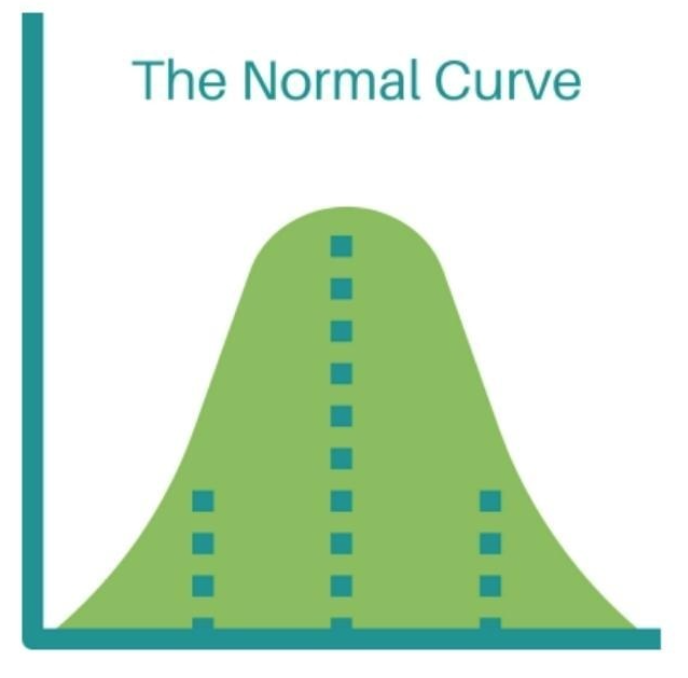
When your testosterone level comes back from the lab, it is compared to a “normal range.” That range is generated by plotting measurements from a reference population on a bell curve and capturing the middle 90%. The top 5% and bottom 5% are excluded as outliers. What remains becomes “normal.”
There are two immediate problems with this. First, it means that normal simply equals like 9 out of 10 people — not thriving, not optimally healthy, just statistically average. Second, if the population used to generate the range was itself running at suboptimal levels, the range codifies insufficiency as acceptable.
The situation with free testosterone in women is particularly troubling. Some prominent laboratory companies set the lower limit of the normal range for free testosterone in women at or near zero. Given testosterone’s established roles in brain function, bone metabolism, muscle maintenance, and sexual health, a lower limit of zero is not a physiologic standard — it is the absence of one.
The Assay Accuracy Problem: Measuring at the Edge of Detection
Female testosterone concentrations exist at the lower boundary of what most standard laboratory assays can reliably detect. To understand why this matters, it helps to know how these units relate to one another. Total testosterone is typically reported in nanograms per deciliter (ng/dL). Free testosterone — the biologically active fraction not bound to sex hormone-binding globulin (SHBG) — is reported in picograms per milliliter (pg/mL). These are not interchangeable units, and the difference in scale is significant: 1 ng/dL equals 10 pg/mL. A nanogram is 1,000 picograms, and a deciliter is 100 milliliters, so the conversion works out to a factor of 10.
In concrete terms: total testosterone in women typically falls somewhere in the range of 15–70 ng/dL, or equivalently 150–700 pg/mL. Free testosterone in women, however, is reported in a range of approximately 0.6–6.4 pg/mL — numbers so vanishingly small that they sit at or below the reliable detection threshold of many standard immunoassay methods used in routine clinical laboratories. To put that in perspective, a free testosterone level of 1.5 pg/mL is the same as 0.15 ng/dL. Written out that way, it becomes clear why standard assays — designed to measure hormones across a wide population that includes men, whose testosterone runs 10 to 20 times higher — struggle to accurately resolve these tiny values in women. The margin between “normal” and “deficient” at these concentrations may be smaller than the assay’s own margin of error.
Direct analog radioimmunoassay (RIA) methods for free testosterone, which are widely used in clinical practice, have been specifically criticized for their inaccuracy at the low concentrations found in women. Miller and colleagues demonstrated in 2004 that direct RIA methods were unreliable for assessing free testosterone in women and recommended equilibrium dialysis or mass action calculation instead. (2)
The gold standard for total testosterone measurement is liquid chromatography-tandem mass spectrometry (LC-MS/MS), which provides the sensitivity and specificity required to accurately quantify female concentrations. Equilibrium dialysis is the gold standard for free testosterone. Neither is universally available in routine clinical practice.
The clinical consequence of this is significant: a woman’s testosterone can be reported as “normal” on a standard lab panel using an assay that lacks the precision to meaningfully distinguish low-normal from deficient at female concentration ranges. She may be told her results are reassuring when the measurement itself is not reliable.
The Research Gap: A Field That Never Received Adequate Investment
The major studies that established the testosterone reference ranges in use today include Davison et al. (2005), Braunstein et al. (2011), Haring et al. (2012), and Skiba et al. (2019). (3,4,5,6) These studies established statistical distributions of testosterone levels in screened female cohorts. They did not define what testosterone level corresponds to optimal cognitive function, bone health, sexual wellbeing, or energy in women. The reference range and the optimal range are entirely different questions — and only one of them has been studied.
Women’s health research as a whole is chronically underfunded relative to conditions affecting men, a disparity documented in a 2023 analysis published in Nature. (7) Testosterone in women exemplifies this gap: no FDA-approved product, no outcome-correlated reference ranges, and a clinical standard of care built largely on extrapolation from male data.
The Inclusion Criteria Problem: A Fundamental Flaw in How Reference Ranges Were Built
This is one of the most overlooked methodological problems in the testosterone literature, and it deserves careful examination. When I reviewed the inclusion criteria for the major reference range studies, something important stands out.
What “Healthy” Meant in These Studies
The primary proxy for health across the major reference range studies was regular menstrual cyclicity:
- Braunstein et al. (2011): regular menstrual cycles of 21–35 days, absence of known endocrine disorders (4)
- Davison et al. (2005): community-recruited women free of PCOS, exogenous steroid use, and surgical history (3)
- Skiba et al. (2019): regular cycles of 21–35 days, no PCOS diagnosis, no hormone therapy use (6)
These are the cohorts whose testosterone measurements were used to define what is “normal” for all women. And they were considered healthy, in large part, because they were having regular periods.
The Critical Flaw: Menstrual Regularity Does Not Reflect Testosterone Status
Menstrual cycle regularity is governed by the hypothalamic-pituitary-ovarian (HPO) axis — specifically the coordinated interplay of GnRH, LH, FSH, estradiol, and progesterone. Progesterone secreted by the corpus luteum and estradiol produced by the developing follicle are the hormones that regulate cycle length, ovulation timing, and endometrial cycling.
Testosterone plays no primary regulatory role in generating or maintaining the menstrual cycle.
A woman can have textbook 28-day cycles, ovulate regularly, and carry estradiol and progesterone in their expected ranges — while simultaneously having suboptimal or frankly insufficient free testosterone. The two systems are regulated largely independently of one another.
Using menstrual cycle regularity as a proxy for androgenic sufficiency is therefore a category error. It confirms that the estrogen-progesterone axis is functioning. It tells us nothing meaningful about testosterone status.
What the Inclusion Criteria Confirmed — and What It Did Not
What regular menstrual cycles confirmed in the reference population:
- Adequate LH and FSH pulsatility from the hypothalamus and pituitary
- Functional folliculogenesis and ovulation — an estradiol-driven process
- Intact corpus luteum function — a progesterone-driven process
- Absence of gross hyperandrogenism sufficient to disrupt cycling (as seen in PCOS)
What the inclusion criteria did not assess or exclude:
- Symptoms of androgen insufficiency: diminished libido, fatigue, cognitive fog, reduced muscle mass, loss of the sense of wellbeing
- Whether free testosterone in the lower portion of the measured range was associated with functional impairment
- SHBG levels that may suppress bioavailable testosterone even when total testosterone appears adequate
- Adrenal androgen contribution via DHEA-S, a significant precursor to testosterone in women that declines with age independently of ovarian function
The Circularity Problem
These studies assumed that women without overt pathology had adequate hormone levels, then measured their testosterone to define the “normal” range, which is subsequently used to reassure future patients that their levels are acceptable. If the reference population was, as a group, running at suboptimal testosterone — which is entirely physiologically plausible — the resulting range simply codifies a population-wide insufficiency as normal. The cohort defines the range; the range then validates the cohort.
Consider a useful analogy: defining optimal iron stores by measuring ferritin in a population that was never screened for fatigue, hair loss, or cold intolerance — common functional symptoms of low-normal ferritin even in the absence of frank anemia. The numbers might look unremarkable. The women might not be well. The 2019 Global Consensus Position Statement explicitly acknowledged the absence of validated, outcome-correlated reference ranges as a defining gap in this field. (1)
What a More Rigorous Study Would Require
To genuinely establish optimal testosterone reference ranges in women, a study would need to incorporate:
- Systematic symptom screening for androgen insufficiency using validated instruments such as the Female Sexual Function Index or the Decreased Sexual Desire Screener
- Correlation of measured free testosterone levels with clinical outcomes including sexual function, energy, cognitive performance, and musculoskeletal parameters
- Assessment of SHBG to confirm bioavailability, not just total testosterone in isolation
- Free testosterone measurement using LC-MS/MS combined with equilibrium dialysis
- A longitudinal design to track how hormone levels correlate with functional outcomes over time
None of the major reference range studies employed this design. This is not a criticism of the researchers — it reflects the state of the field and the absence of funding to do this work properly. But it does mean that when a lab report tells a woman her testosterone is “normal,” that claim rests on a foundation with significant structural limitations.
No FDA-Approved Product: The Wild West of Women’s Testosterone Therapy
There is currently no FDA-approved testosterone formulation specifically indicated for women in the United States. Not one. Despite decades of off-label clinical use, a robust evidence base for benefits in sexual function and wellbeing, and an internationally recognized position statement calling for female-specific products, women in 2026 are still navigating a landscape with no regulatory home.
What they get instead is a patchwork of off-label options — men’s testosterone gels, injectable testosterone cypionate or enanthate formulated for male pharmacokinetics, or compounded preparations of wildly variable quality from pharmacies whose practices may or may not meet rigorous manufacturing standards.
The men’s formulation problem deserves particular attention. A woman instructed to apply one-tenth of a pump of AndroGel is being asked to self-administer a medication designed to restore testosterone in a hypogonadal man — whose target range is 300–1,000 ng/dL — at a dose increment that cannot be meaningfully titrated for a woman whose entire therapeutic range may span 15–50 ng/dL. The concentration is wrong. The dose resolution is wrong. The formulation was not designed for female skin absorption characteristics. The monitoring protocols were not developed for female physiology.
The result is exactly what one would predict: inconsistent dosing, unpredictable absorption, supraphysiologic levels in some women, insurance denials, access inequities, and a proliferation of online prescribing practices operating with minimal clinical oversight.
The 2019 Global Consensus Position Statement was unambiguous: there is both an evidence base for testosterone therapy in women and an urgent need for regulatory-approved, female-specific formulations. (1) That need remains unmet.
Doing It Right: What Good Testosterone Therapy in Women Actually Looks Like
Compounded Preparations Done Properly
In the absence of an approved product, thoughtfully prescribed compounded testosterone remains a reasonable option — when it is done with rigor. That means:
- Comprehensive baseline testing before initiation: total testosterone, free testosterone by LC-MS/MS with equilibrium dialysis where available, SHBG, and a full sex hormone panel including estradiol, progesterone, and DHEA-S
- Dosing formulated at female-physiologic concentrations by a compounding pharmacy with validated manufacturing practices — not a fraction of a men’s commercial product
- Regular follow-up monitoring of levels to confirm the patient is achieving physiologic range without accumulation or supraphysiologic drift
- Symptom correlation as the primary clinical target: resolution of androgen insufficiency symptoms at the lowest effective dose, not achievement of an arbitrary number on a lab report
- Urine hormone metabolite testing (such as the DUTCH test) to assess how testosterone is being processed, which pathways are active, and whether metabolites are accumulating in directions that warrant attention
Pellet Therapy: The Promise and the Pitfalls
Subcutaneous testosterone pellet implantation offers an appealing premise: consistent, steady-state hormone delivery over several months without the compliance burden of daily application. For some patients, this is genuinely valuable.
A limitation is dose inflexibility. Once a pellet is implanted, the dose cannot be adjusted downward. If levels overshoot — which can occur with imprecise initial dosing or individual variation in pellet absorption — the patient carries supraphysiologic testosterone until the pellet is exhausted, which may take three to six months.
Pellet therapy done responsibly requires conservative initial dosing, pre-insertion laboratory evaluation, follow-up levels at four to six weeks post-insertion, and a provider who has developed genuine expertise in female-specific dosing. It is not appropriate for every patient, and the irreversibility of an implanted dose demands careful selection and informed consent.
Understanding Testosterone Metabolism: It Is Not Just About the Level
Testosterone does not act in isolation. How the body metabolizes it shapes both the therapeutic response and the side effect profile. There are two primary downstream conversion pathways:
- Aromatization to estradiol — via the aromatase enzyme, particularly in adipose tissue. In most women, a small degree of aromatization is physiologically normal and contributes to estrogen balance. At appropriate physiologic doses of testosterone, this conversion is generally not a clinical concern. Monitoring estradiol levels as part of routine follow-up is sufficient to identify the uncommon situation where conversion is excessive.
- Conversion to dihydrotestosterone (DHT) — via 5-alpha reductase. DHT is a more potent androgen and is relevant to androgenic side effects such as acne and hair thinning.
SHBG must also be assessed as part of any testosterone evaluation. High SHBG binds testosterone and reduces bioavailability, meaning a woman with a “normal” total testosterone and elevated SHBG may have very little free, active hormone. Low SHBG, conversely, may allow greater free testosterone activity than the total level would suggest.
Two women on identical doses of testosterone can have very different clinical experiences depending on their individual metabolic enzyme activity. This is why the approach must be personalized — not protocol-driven.
A New Drug on the Horizon — But Not Without Questions: AVA-291 (d3-Testosterone)
What It Is and Why It Matters
AVA-291, developed by Aviva Bio, is an investigational deuterium-substituted isotopologue of testosterone. In plain terms: it is structurally identical to endogenous testosterone, but select hydrogen atoms have been replaced with deuterium — a naturally occurring, stable, non-radioactive heavy isotope of hydrogen with an atomic mass of 2 rather than 1.
The rationale for this substitution is specific and scientifically grounded. Deuterium-substituted bonds are more resistant to enzymatic cleavage than normal carbon-hydrogen bonds, due to the kinetic isotope effect. By placing deuterium at positions targeted by the aromatase enzyme, AVA-291 is engineered to resist aromatization — the conversion of testosterone to estradiol.
Aviva Bio frames aromatization as the primary safety concern justifying this structural modification, citing the theoretical link between local estrogen production in breast tissue and estrogen-receptor-positive (ER+) breast cancer risk. Preclinical data suggest AVA-291 stimulates ER+ breast cancer cell proliferation approximately 1,000-fold less than standard testosterone, with findings scheduled for presentation at the American Association for Cancer Research Annual Meeting in April 2026.
That premise deserves scrutiny. The FDA recently removed the black-box warning on estrogen therapy that had cast a long shadow over hormone replacement for more than two decades — a warning rooted in the misinterpretation of the Women’s Health Initiative data. That removal reflects a growing scientific consensus that estrogen, at physiologic doses, is not the carcinogenic agent it was once portrayed to be in healthy women without a personal history of hormone-sensitive cancer. If the foundational fear driving the aromatization concern has been substantially revised by the very regulatory body tasked with evaluating it, then the urgency of engineering around aromatization in the general female population requires re-examination.
For the small subset of women with a personal history of estrogen-receptor-positive breast cancer, the clinical picture is more nuanced — and there is meaningful work in this space. Dr. Rebecca Glaser’s research on subcutaneous testosterone pellet therapy using anastrozole co-pellets to locally block aromatization has demonstrated both safety and benefit in this population, providing a targeted solution for women who have the most legitimate reason to limit estradiol conversion. (13) That is a real solution to a real problem in a specific, identifiable subgroup. It is not, however, a justification for altering the molecular structure of testosterone for all women.
For the vast majority of women without a history of hormone-sensitive cancer, a small percentage of testosterone converting to estradiol is not a pathological event — it is physiology. Testosterone has always aromatized in women. The body has co-evolved with that process. Monitoring estradiol levels during therapy, adjusting dose appropriately, and selecting a route of administration that minimizes supraphysiologic peaks are sufficient, evidence-aligned strategies for managing aromatization in the general population. Deuterium substitution is not required.
In January 2026, Aviva Bio received positive formal guidance from the FDA via a Type B meeting, clarifying the regulatory development pathway for a women’s testosterone therapy. A Phase 1 clinical trial was announced for early 2026. As of this writing, no interim human data have been publicly reported.
This represents the first serious regulatory pathway toward an FDA-approved testosterone product specifically designed for women. That is genuinely significant, and it deserves acknowledgment. Women have waited a very long time for this.
Why Scientific Caution Is Also Warranted: The Deuterium Question
With that acknowledgment made, I want to raise a question that I believe deserves serious consideration before AVA-291 — or any deuterium-labeled steroid — is adopted as a standard of care for millions of women.
Deuterium is not inherently dangerous. It is present in biological systems at trace concentrations — approximately 0.015% of hydrogen atoms in natural water. At physiological ambient concentrations, it poses no known harm. Deuterium-substituted pharmaceuticals are not new: deutetrabenazine (Austedo), FDA-approved for Huntington’s disease chorea, uses the same strategy and has demonstrated an acceptable safety profile with reduced side effects compared to its non-deuterated parent compound.
However, the specific question of chronic systemic exposure to a deuterium-labeled steroid hormone — one that circulates throughout the body, enters the brain, bone, breast, and muscle — over months to years has not been studied in human trials. That is not the same as saying it is unsafe. It is saying we do not yet know.
Research by Stephanie Seneff and colleagues at MIT raises a theoretical concern worth noting. In a 2025 review published in FASEB BioAdvances, Seneff, Nigh, and Kyriakopoulos proposed that deuterium, at elevated concentrations in mitochondria, can interfere with the rotary mechanism of ATP synthase — the molecular motor responsible for generating ATP — by virtue of its greater mass and the resulting kinetic isotope effect on hydrogen-dependent reactions. (8) The proposed consequence is reduced ATP production and increased output of reactive oxygen species (ROS), contributing to mitochondrial dysfunction.
It is important to be precise about what this research does and does not claim. Mainstream scientific consensus holds that deuterium-substituted drugs at therapeutic doses do not produce systemic deuterium accumulation sufficient to disrupt mitochondrial function. The kinetic isotope effect in a deuterated pharmaceutical is exploited at the level of specific metabolic bonds in the drug molecule — not distributed throughout cellular water. Seneff’s broader hypotheses about deuterium, chronic disease, and glyphosate remain speculative and are not established consensus science.
That said, the question is not unreasonable to ask: when a deuterium-labeled steroid is administered chronically to women — a population that may use testosterone therapy for years to decades — what is the long-term fate of that deuterium label? Does it accumulate in tissues? Does it enter pathways relevant to mitochondrial hydrogen cycling? Does it behave differently than deuterium in a small-molecule neurological drug with a very different tissue distribution profile?
These questions have not been answered by existing preclinical data, and they are appropriate questions to ask before widespread clinical adoption.
The Chronic Illness Context: “Won’t Kill You” Should NOT be the Standard
Here is the broader concern that I cannot set aside, and it goes beyond the pharmacology of AVA-291 specifically. We are not prescribing into a healthy population. We are prescribing into a population in which chronic illness has become the statistical norm.
According to the CDC, approximately 60% of American adults have at least one chronic disease, and 40% have two or more. Conditions once considered diseases of aging — metabolic dysfunction, autoimmunity, cognitive decline, persistent fatigue, inflammatory disorders — are now presenting in younger and younger patients. Chronic fatigue, in particular, has become so pervasive that many people have quietly reclassified it as a normal feature of modern life rather than a symptom that warrants investigation. It is not normal. But it is increasingly common.
This matters to the deuterium discussion in a specific way. The preclinical safety argument for AVA-291 is built, in part, on the premise that therapeutic doses of a deuterium-substituted compound will not produce systemic deuterium accumulation sufficient to cause harm. That argument is derived from studies of deuterium toxicity in otherwise healthy biological systems. But many of the women who will be prescribed this medication — if it is approved — are not operating in otherwise healthy biological systems. They are women with mitochondrial dysfunction already expressed as fatigue. Women with pre-existing inflammatory burden. Women with impaired detoxification capacity, gut dysbiosis, or years of accumulated environmental toxic load from pesticides, plasticizers, heavy metals, and other endocrine-disrupting compounds.
The threshold at which “won’t cause harm” is established in a healthy, well-functioning system may not be the same threshold that applies to a woman already carrying a substantial allostatic load. If Seneff’s proposed mechanism — that deuterium interferes with ATP synthase efficiency and increases reactive oxygen species output — has any validity at physiologically relevant concentrations, then the women most likely to be harmed are precisely those who are already the most metabolically compromised. They are also, not coincidentally, often the women most likely to be seeking testosterone therapy in the first place.
This connects to a principle I hold across all of clinical medicine: the goal of therapeutic intervention should not be merely to avoid acute harm. It should be to restore and support the body’s innate capacity to function. Every substance we introduce — every medication, every supplement, every intervention — is either contributing to that goal or working against it. The standard of “it won’t kill you” is not a standard at all. It is the lowest possible bar, and chronically ill patients deserve better than the lowest bar.
We are already living in a sea of toxicants. Glyphosate residues are detectable in human urine, breast milk, and cerebrospinal fluid. Phthalates and bisphenols are measurable in the vast majority of Americans tested. Per- and polyfluoroalkyl substances (PFAS) have been found in human blood at detectable concentrations across all age groups. Heavy metals accumulate in bone and brain tissue over decades. The body is not infinitely resilient in the face of this ongoing exposure. Its buffering capacity — its ability to manage, metabolize, and eliminate what does not belong — is finite, and for many patients, it is already strained.
Against that backdrop, the question I am compelled to ask is not “is this dose of deuterium acutely toxic?” The question is: why would we deliberately engineer a foreign isotope into a hormone medication when a chemically identical, isotopically natural alternative — bioidentical testosterone — already exists and can be compounded at female-physiologic doses? For the majority of women, aromatization at physiologic testosterone doses is not a problem to be solved — it is a normal biochemical process. Where aromatization does warrant attention, such as in women with a history of estrogen-receptor-positive breast cancer, targeted solutions already exist. The broad aromatization concern does not justify a structural modification to the hormone molecule for the general female population.
The chronic illness epidemic mushrooming across our society did not arise from a single cause. It arose from the accumulation of many small insults — each one, in isolation, deemed acceptable by the standards of the day. We should be asking whether each new therapeutic addition reduces that burden or adds to it. That is not obstructionism. That is the practice of medicine with a long view.
The Core Tension
We may be at risk of replacing one inadequately studied approach — off-label male formulations — with a novel molecular entity whose long-term isotope-related biology has not been characterized in human studies. The history of women’s hormone therapy is already marked by treatments that were adopted with enthusiasm before long-term data were available, with consequences that took decades to understand.
Supporting the development of AVA-291 and asking rigorous questions about it are not mutually exclusive positions. They are both part of practicing evidence-based medicine on behalf of women. The goal is not to obstruct progress. The goal is to ensure that when an FDA-approved testosterone product for women finally arrives, it is one whose long-term safety we have genuinely earned the right to assert.
What Women and Their Clinicians Should Be Demanding
After reviewing the full landscape, here is what I believe women deserve — and should advocate for:
- Female-specific formulations at physiologically appropriate doses, studied in female populations, with regulatory approval. Not a fraction of a man’s prescription.
- Standardization of free testosterone measurement using LC-MS/MS with equilibrium dialysis across clinical practice — not immunoassay methods that lack the precision to reliably measure female concentrations.
- Outcome-correlated reference ranges, not just statistical normal ranges. Ranges derived from studies that assessed how testosterone levels relate to cognitive function, bone health, sexual wellbeing, and energy in women across reproductive life stages.
- Increased research funding for women’s androgen biology, including longitudinal outcome studies and trials specifically powered to establish clinical endpoints in female populations.
- Transparent, informed conversations about all available delivery options — compounded topicals, pellets, and emerging novel agents — with honest accounting of both benefits and monitoring requirements.
- Long-term safety evaluation of any novel formulation, including AVA-291, before it becomes a default standard of care. The absence of known harm in preclinical data is not the same as demonstrated long-term safety in humans.
The Right Conversation, Done Right
The silence around testosterone in women is breaking. That is long overdue. But the goal of this conversation must be more than simply prescribing more — it must be to prescribe correctly, monitor rigorously, and research honestly.
Women deserve a testosterone therapy that was designed for them, studied in them, dosed for their physiology, and evaluated for long-term safety in their bodies. That means:
- Compounding done with precision and appropriate monitoring
- Pellets prescribed conservatively, with full informed consent about dose inflexibility
- Novel agents welcomed with scientific curiosity and appropriate scrutiny
- Reference ranges that reflect optimal function, not a statistical average of an understudied population
The reference ranges we use today were built on cohorts screened for regular menstrual cycles — a measure of estrogen and progesterone function that tells us nothing about testosterone status. The assays used to measure those ranges lack the precision required at female concentration levels. The inclusion criteria assumed health without measuring the very outcomes testosterone affects. And yet these ranges are used daily to tell women that their levels are normal and no further evaluation is warranted.
At Hormone Locksmith, the approach has always been this: normal is not the target. Optimal is. And optimal requires understanding the full picture — not just what is convenient to measure, but what the science has not yet bothered to ask.
If you have been told your testosterone is “normal” but you are exhausted, foggy, struggling with libido, losing muscle, or simply not yourself — that normal range may not be telling your whole story.
You deserve better than that.
References
- Davis SR, Baber R, Panay N, et al. Global Consensus Position Statement on the Use of Testosterone Therapy for Women. J Clin Endocrinol Metab. 2019;104(10):4660-4666. doi:10.1210/jc.2019-01603
- Miller KK, Rosner W, Lee H, et al. Measurement of free testosterone in normal women and women with androgen deficiency: comparison of methods. J Clin Endocrinol Metab. 2004;89(2):525-533. doi:10.1210/jc.2003-031008
- Davison SL, Bell R, Donath S, Montalto JG, Davis SR. Androgen levels in adult females: changes with age, menopause, and oophorectomy. J Clin Endocrinol Metab. 2005;90(7):3847-3853. doi:10.1210/jc.2005-0212
- Braunstein GD, Reitz RE, Buch A, Schnell D, Caulfield MP. Testosterone reference ranges in normally cycling healthy premenopausal women. J Sex Med. 2011;8(10):2924-2934. doi:10.1111/j.1743-6109.2011.02380.x
- Haring R, Hannemann A, John U, et al. Age-specific reference ranges for serum testosterone and androstenedione concentrations in women measured by liquid chromatography-tandem mass spectrometry. Clin Endocrinol (Oxf). 2012;77(2):318-325. doi:10.1111/j.1365-2265.2012.04351.x
- Skiba MA, Bell RJ, Islam RM, Handelsman DJ, Desai R, Davis SR. Androgens during the reproductive years: what is normal for women? J Clin Endocrinol Metab. 2019;104(11):5382-5392. doi:10.1210/jc.2019-01357
- Kozlov M. Women’s health research lacks funding — these charts show how. Nature. 2023. doi:10.1038/d41586-023-01475-2
- Seneff S, Nigh G, Kyriakopoulos AM. Is deuterium sequestering by reactive carbon atoms an important mechanism to reduce deuterium content in biological water? FASEB BioAdvances. 2025. doi:10.1096/fba.2025-00032
- Wierman ME, Basson R, Davis SR, et al. Androgen therapy in women: a reappraisal: an Endocrine Society Clinical Practice Guideline. J Clin Endocrinol Metab. 2014;99(10):3489-3510. doi:10.1210/jc.2014-2260
- Burger HG. Androgen production in women. Fertil Steril. 2002;77 Suppl 4:S3-5. doi:10.1016/s0015-0282(02)02985-0
- Glaser RL, York AE, Dimitrakakis C. Beneficial effects of testosterone therapy in women measured by the validated Menopause Rating Scale (MRS). Maturitas. 2011;68(4):355-361. doi:10.1016/j.maturitas.2011.02.007. See also: Glaser R, Dimitrakakis C. Testosterone therapy in women: myths and misconceptions. Maturitas. 2013;74(3):230-234. doi:10.1016/j.maturitas.2013.01.003
- Centers for Disease Control and Prevention. Chronic Diseases in America. National Center for Chronic Disease Prevention and Health Promotion. https://www.cdc.gov/chronicdisease/resources/infographic/chronic-diseases.htm. Accessed March 2026.
- Trasande L, Zoeller RT, Hass U, et al. Estimating burden and disease costs of exposure to endocrine-disrupting chemicals in the European Union. J Clin Endocrinol Metab. 2015;100(4):1245-1255. doi:10.1210/jc.2014-4324
Disclaimer: This article is intended for educational and informational purposes only and does not constitute medical advice. The information presented reflects the author’s clinical perspective and a review of available scientific literature as of the date of publication. Individual hormone therapy decisions should be made in consultation with a qualified healthcare provider who can evaluate your specific clinical history, symptoms, and laboratory data. Off-label use of testosterone therapy in women should be undertaken only under appropriate medical supervision with regular monitoring.